
How to Choose a Reservation System for Restaurants: 2026 Guide
Seven critical criteria when choosing a restaurant reservation system: commission, integrations, no-show management, and pricing models.
In 2026, most restaurants in Turkey still manage reservations via phone, WhatsApp, and a notebook. But guest expectations have shifted: instant confirmation, digital reminders, and Google booking are now standard. Choosing the right system is a strategic decision that directly affects operations, revenue, and team efficiency.
This guide offers a clear framework for restaurant owners and operations managers.
1. Clarify your needs first
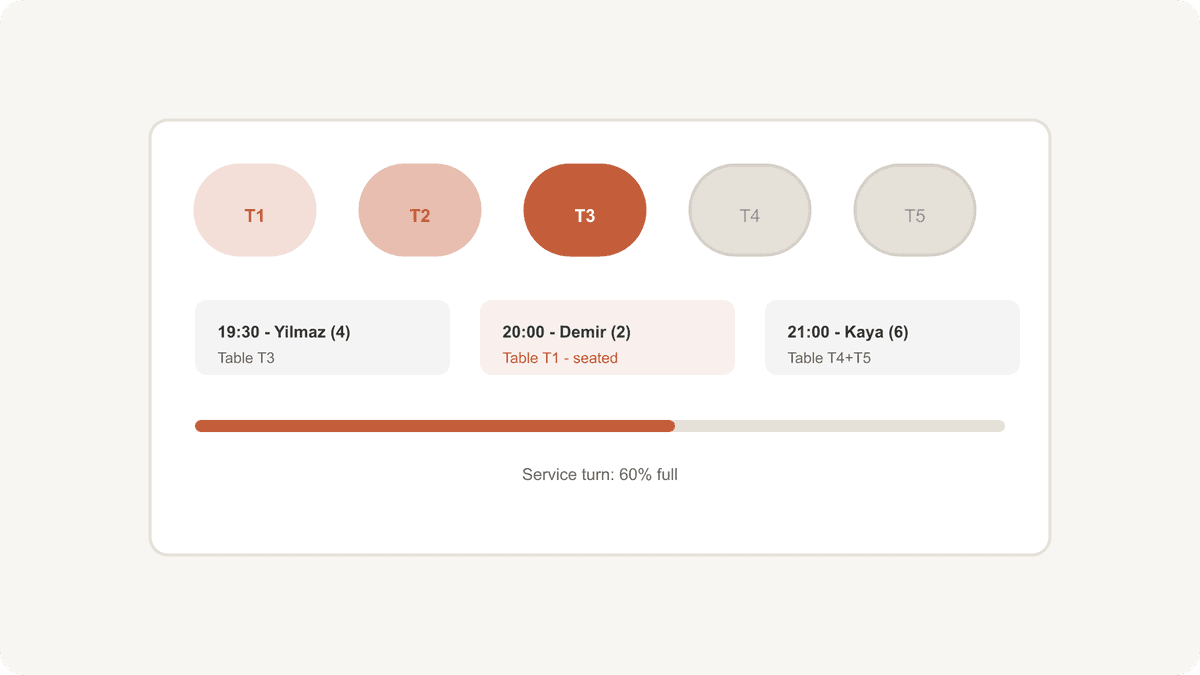
Every restaurant is different. A 30-seat bistro and a 200-seat fine dining venue have different reservation dynamics. Answer: How many bookings per day? How many table turns? What is your no-show rate? Who manages reservations?
- Daily booking volume (under 10 / 10-50 / 50+)
- Table turns and average seating time
- Current and target no-show rate
- Team size and technical comfort
2. Must-have features
In 2026, a reservation system should at minimum offer: online booking form, auto confirm/decline, opening hours control, guest database, and basic reporting. Beyond that: WhatsApp reminders, Google Calendar sync, deposits, and digital menu integration.
- 24/7 online booking + mobile-friendly form
- WhatsApp / SMS auto reminders
- Floor plan and host screen
- Google Reserve with Google integration
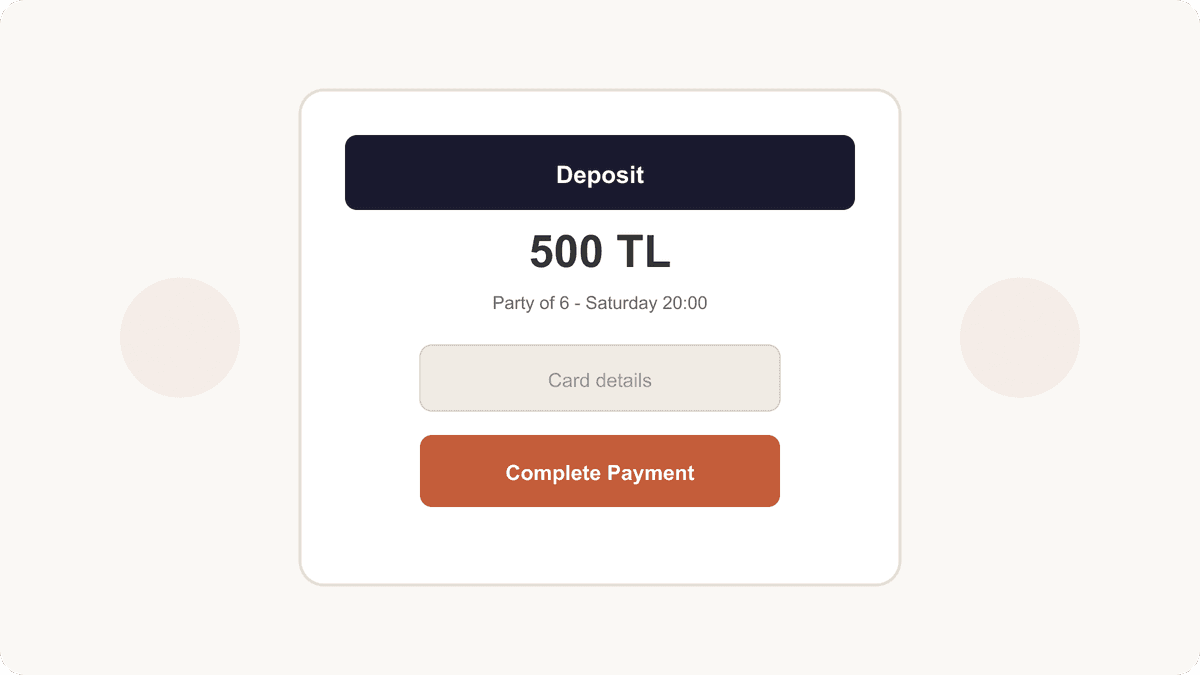
- Deposit and cancellation policy management
- Guest CRM and visit history
3. Read the pricing model correctly
Three main models: flat monthly fee, per-reservation commission, and freemium. Flat fee (like TablePing) gives predictable cost — 80 bookings on a busy Saturday costs the same as 20.
- Flat monthly fee: predictable, scalable
- Commission: expensive for busy restaurants
- Freemium: good to start, may fall short when growing
- Hidden costs: setup, training, integration, support
4. Integrations and ecosystem
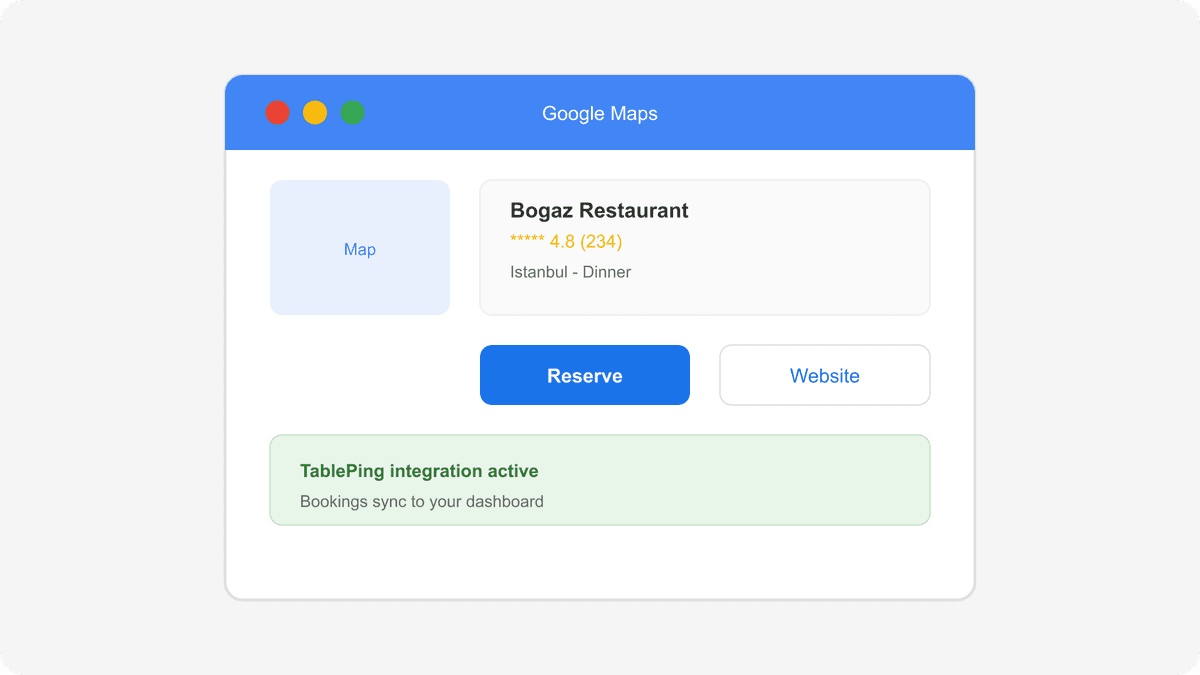
Your system should talk to Google Business Profile, Instagram, website, QR menu, and POS. Reserve with Google turns organic search into bookings.
- Google Business Profile + Reserve with Google
- Two-way Google Calendar sync
- Website embed widget
- Instagram / social bio link
- QR menu integration
5. Decision matrix: TablePing vs alternatives
TablePing is built for Turkey: no commission, Turkish UI and support, WhatsApp reminders and deposits. Global alternatives (OpenTable, Resy) have limited Turkey integration and higher cost.
- TablePing: flat fee, no commission, Turkey-focused
- OpenTable/Resy: global but limited in Turkey, expensive
- Food delivery platforms: commission-based, limited data
- Notebook/WhatsApp: free but does not scale