
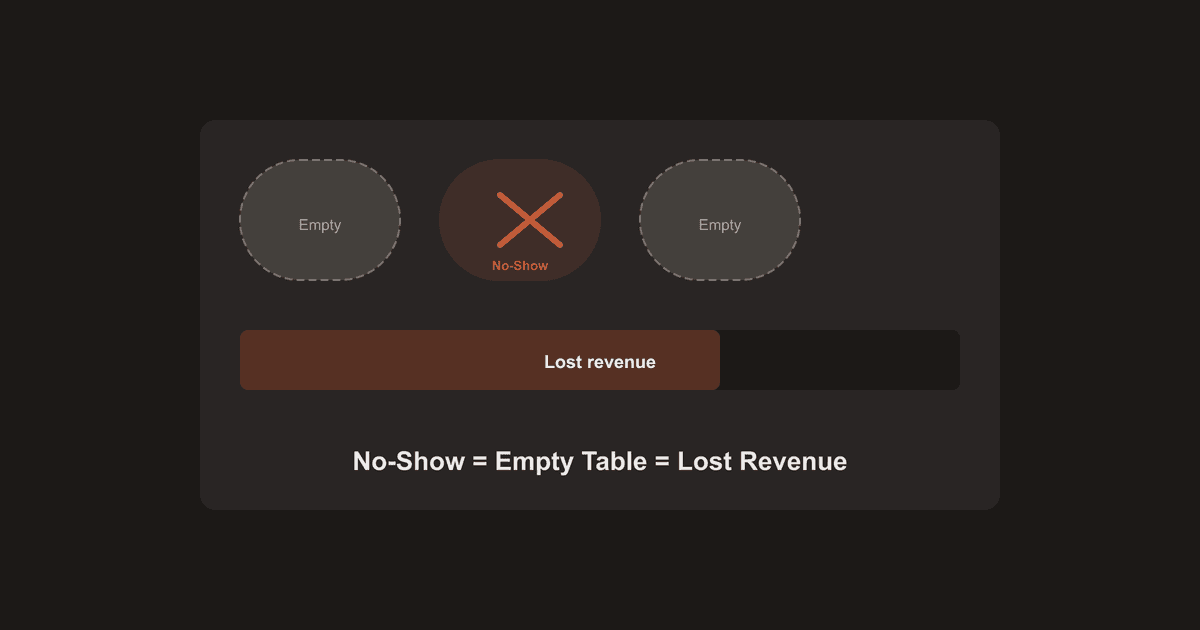
What Is a No-Show and Why Is It So Costly for Restaurants?
No-show definition, average rates in Turkey, per-table revenue loss calculation, and 5 proven strategies to reduce no-shows.
Booked but did not show up — in restaurants this is called a "no-show" and it is one of the biggest hidden costs. This article explains what no-shows are, why they are expensive, and how to reduce them with concrete numbers.
1. What is a no-show?
A no-show is a guest who booked but did not arrive without notice. Average rate in Turkey is 15-20%, reaching 25% on busy weekend evenings.
- No-show: no arrival, no notice
- Late cancellation: less damaging
- Walk-in rejection: indirect cost
2. Cost calculation
Example: ₺800/person, party of 4, 20% no-show rate, 40 bookings. That is 8 empty tables × ₺3,200 = ₺25,600 lost in one evening.
- ₺3,200 per table (4 × ₺800)
- 8 empty tables per evening
- Daily loss: ~₺25,600
- Monthly loss: ~₺200,000+
3. Why are no-shows increasing?
Booking is frictionless but showing up has zero cost. Guests book multiple restaurants and decide last minute.
- Zero-cost booking → low commitment
- Multiple bookings
- No reminders
- Last-minute plan changes
4. Five proven ways to reduce no-shows
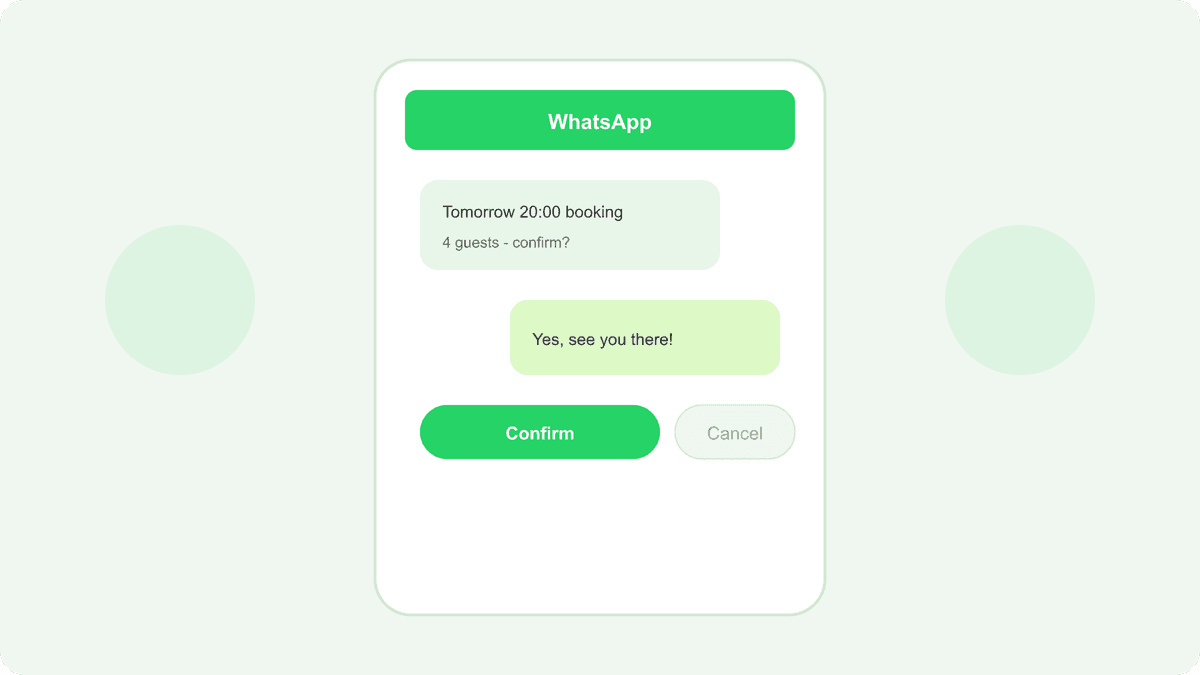
Impossible to eliminate but reducible from 20% to 5%.
- WhatsApp reminders: 30-40% reduction
- Deposits: 50%+ reduction
- Waitlist fill: loss minimization
- Flag repeat no-show guests
- Easy cancel link: late cancel > no-show
5. No-show management with TablePing
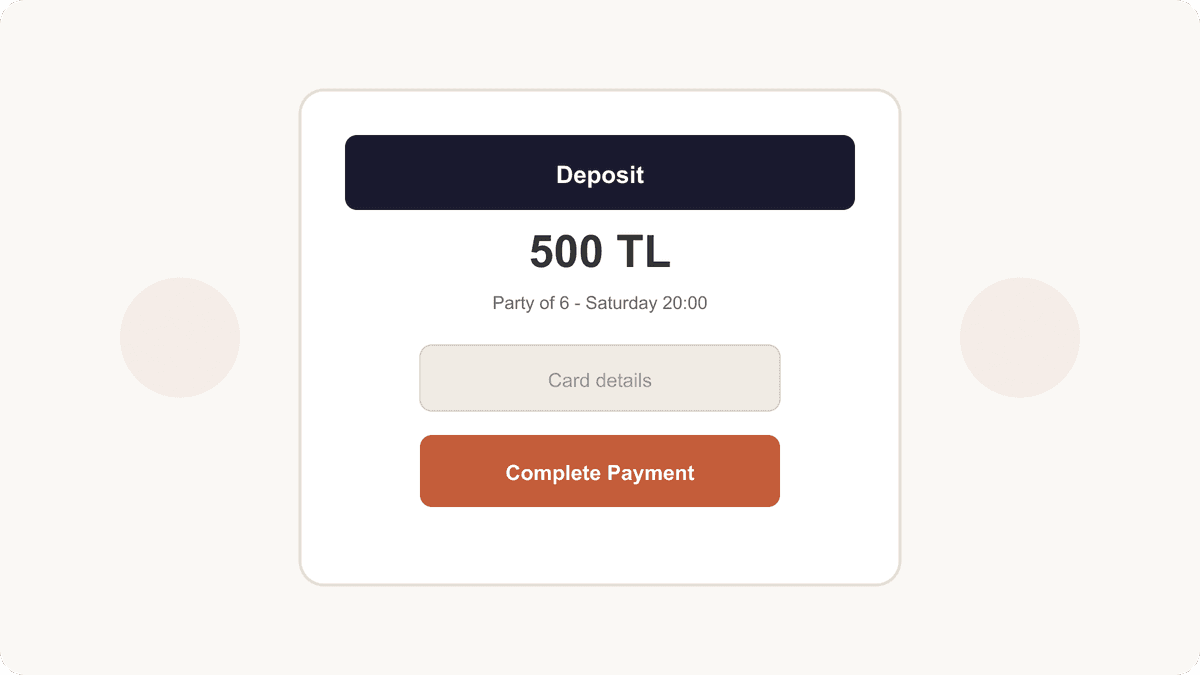
TablePing handles no-shows end-to-end: auto WhatsApp reminders, deposit links, waitlist, and guest history.
- Auto WhatsApp reminders
- Deposit links
- Waitlist automation
- Guest no-show history
- No-show rate reporting