
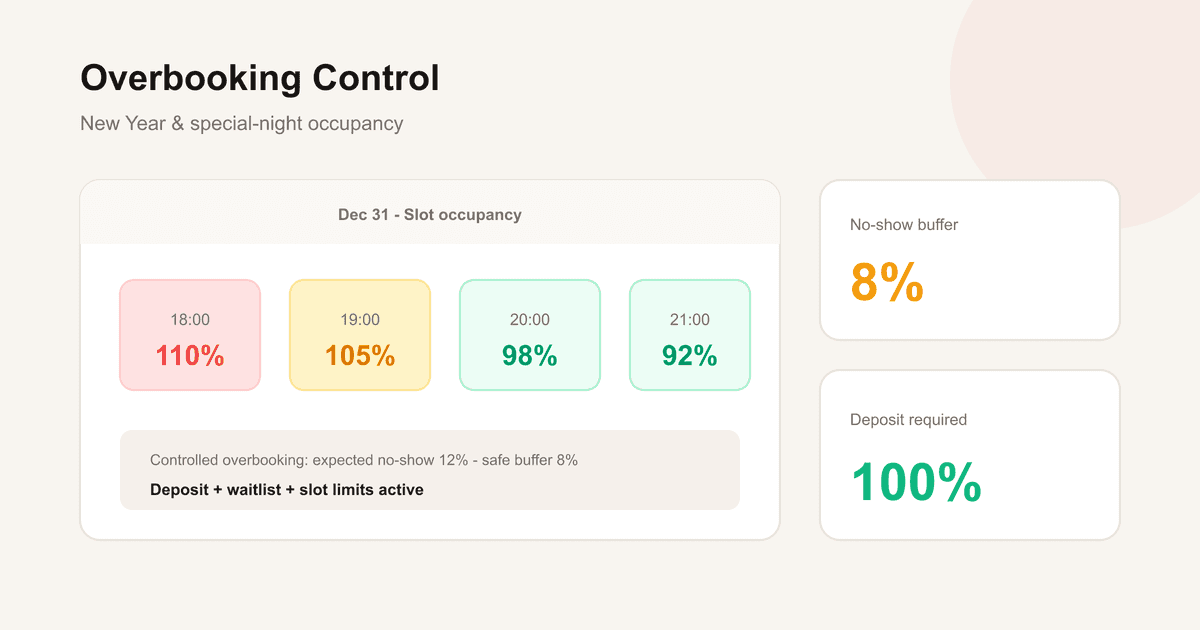
Managing Overbooking for New Year and Special-Occasion Reservations
How to run controlled overbooking on New Year's Eve and peak nights — no-show buffers, deposits, slot limits, and waitlists.
On Dec 31 every seat is gold. Restaurants overbook because no-shows still happen — but uncontrolled overbooking creates standing guests and bad reviews.
This guide covers how to calculate a safe buffer and which safeguards you need.
1. What overbooking is — and when it makes sense
Overbooking means accepting more covers than physical capacity to offset expected no-shows. Target end-of-night occupancy of 95-100%, not chaos at 120%.
- Target 95-100% realized occupancy
- Use historical no-show data
- Require deposits + reminders + waitlist
- Avoid uncontrolled 110%+ overbooking
2. How to calculate the buffer
Buffer ≈ historical no-show × 0.5–0.7, by seating turn — not one flat percentage for the whole night.
- Use special-night history
- Buffer ≈ no-show × 0.5–0.7
- Tune per turn
- Keep buffer low (3-5%) if you lack data
3. Four safety layers
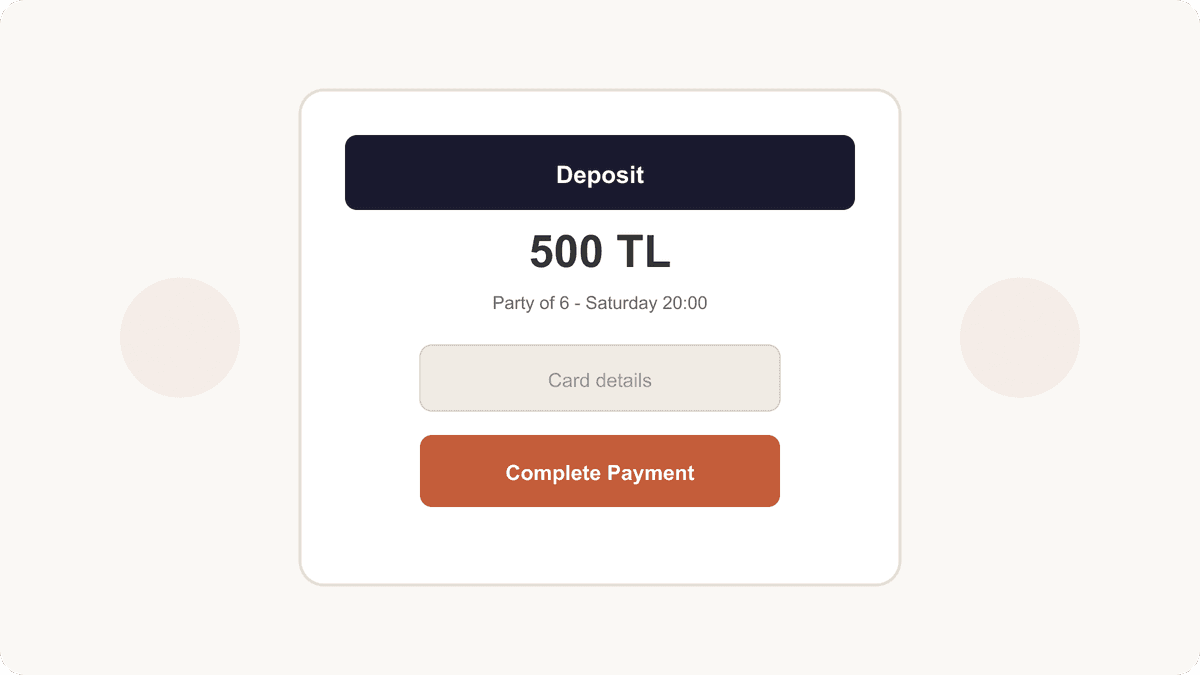
Deposits, multi-step reminders, strict cancel policy, and waitlist. Prefer prepaid set menus on peak nights.
- Deposit / prepaid package
- Multi-step reminders
- Written cancel policy
- Waitlist for last-minute gaps
4. Special-night calendar
Open New Year in November; Valentine's 3-4 weeks out. Use separate capacity, menu, and deposit rules per event night.
- New Year: open in November
- Valentine's: 3-4 weeks ahead
- Holidays: local demand calendar
- Separate capacity and menu per night
5. Crisis plan if everyone shows up
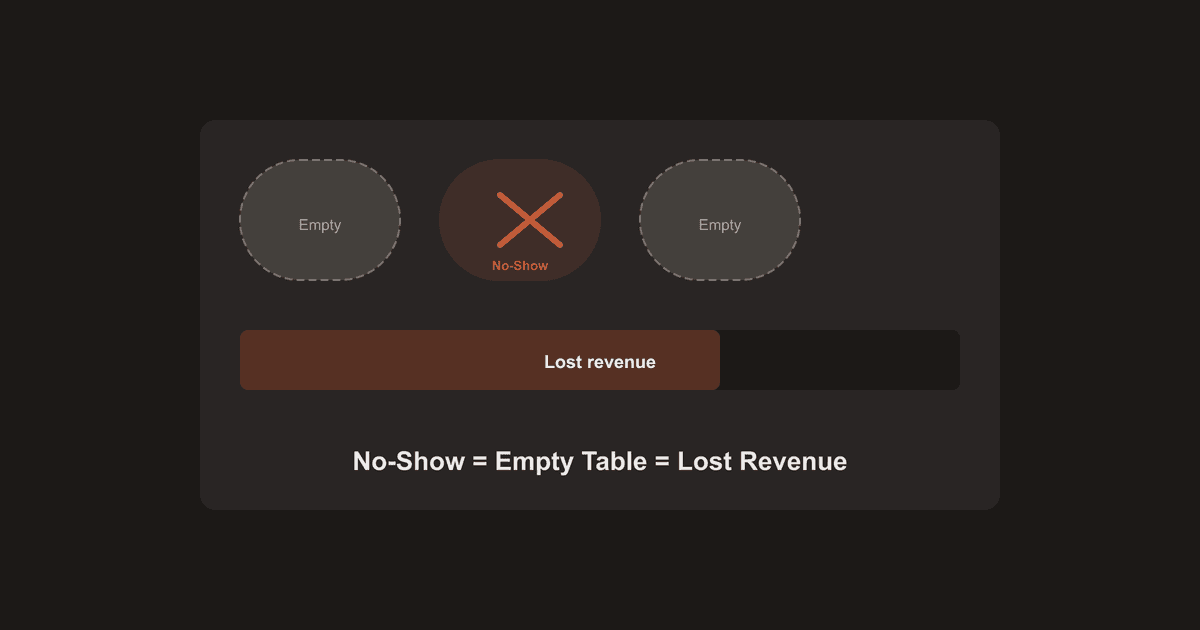
Waiting area, complimentary aperitif, delay script, manager upgrades, rare partner-restaurant protocol.
- Waiting area + hospitality
- Delay communication script
- Upgrade / recovery menu
- Manager escalation
- Partner restaurant as last resort
6. Peak-night control with TablePing
Slot limits, deposit rules, multi reminders, waitlist, and turn-level occupancy/no-show reports.
- Slot / capacity limits
- Special-night deposit rules
- Multi-reminder flows
- Waitlist fill
- Turn-level reports